- support@dalhangyanmancs.res.in



Disease Management in Chickpea
Disease Management in Chickpea
Chickpea Diseases and their Management
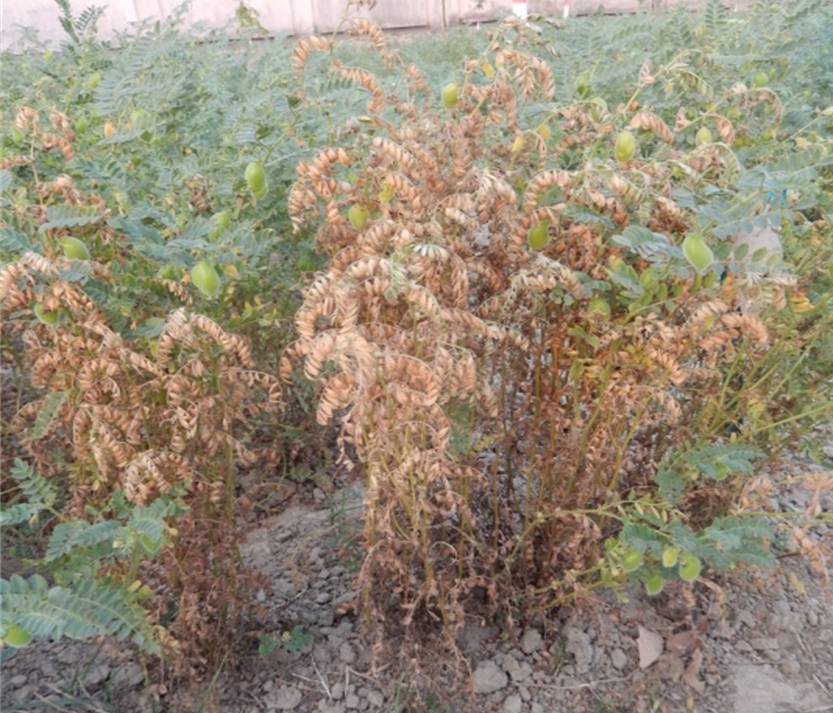
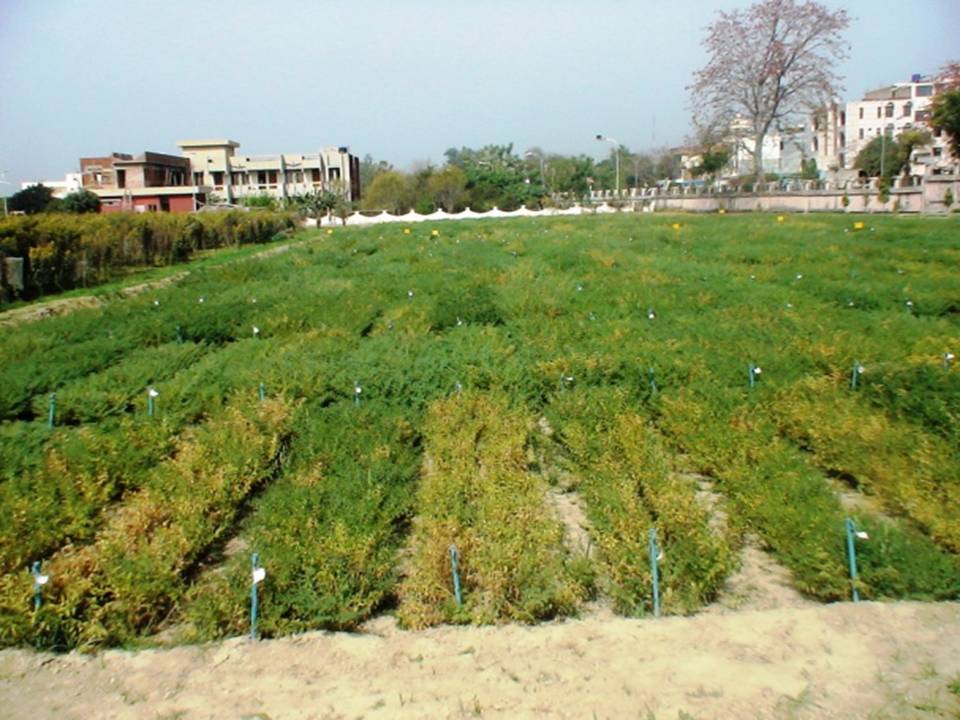
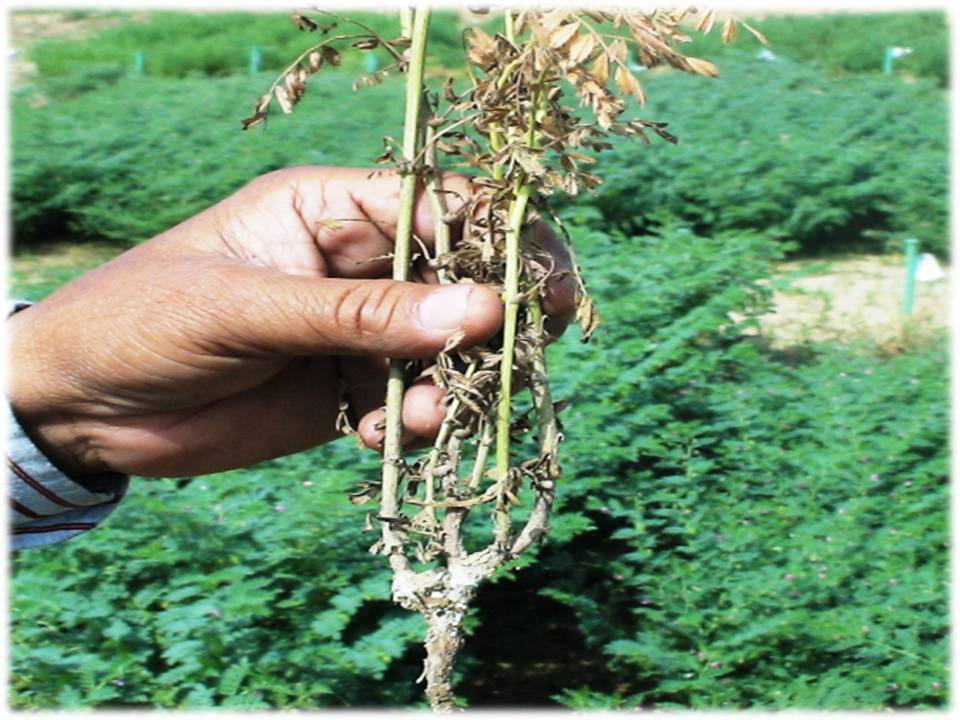
Chickpea is prone to be attacked by a large number of pathogens caused by fungi and viruses. Though a dozen of diseases are infecting this pulse crop, wilt (Fusarium oxysporum f. sp. ciceri), collar rot (Sclerotium rolfsii), stem rot (Sclerotina sclerotiorum), root rots (Rhizoctonia solani, R. bataticola), foliar diseases grey mould (Botrytis cineria) ascochyta blight (Ascochyta rabiei) are most important. Almost all of the diseases and pathogens except wilts and dry root rot, are favoured by optimum to high moisture. While these diseases are aggravated by low moisture vis-à-vis moisture stress situations. This understands the role of moisture in disease epidemiology is certainly an aid in formulating the management strategies for pulse crop diseases.
Important diseases of chickpea, affected areas in India and favorable conditions
|
Disease |
Causal pathogen |
Affected areas |
Favourable conditions |
|
Wilt |
Fusarium oxysporum f. sp. ciceris |
All chickpea areas |
Soil moisture of 30-60% WHC favourable, high moisture deleterious |
|
Dry root rot |
Macrophomina phaseolina (Rhizoctonia bataticola) |
All zones, severe in central and SZ |
Semi-arid climate, low soil moisture in February-March or rainfed cropping |
|
Ascochyta blight |
Aschochyta rabiei |
NWPZ especially Punjab |
Humid and cool climate with high soil moisture |
|
Collar rot |
Sclerotium rolfsii |
All zones |
Humid and warm climate with high soil moisture or dense crop canopy |
|
Stem rot |
Sclerotina sclerotiorum |
Foot hills, NEPZ, NWPZ |
Cool climate, thick and luxurious growth and high moisture in crop canopy |
|
Rust |
Uromyces ciceris |
Sporadic in NWPZ |
Warm and humid conditions |
|
Leaf blight |
Alternaria alternate |
NEPZ |
Warm and humid conditions with rising temperature |
|
Wet root rot |
Rhizoctonia solani |
All zones, more in NEPZ and Tarai areas |
Warm climate and high moisture with sandy or sandy loam soil |
|
Black root rot |
F. solani |
NEPZ, NWPZ |
High soil moisture or heavy irrigation during December-January |
|
Grey mold |
Botrytis cineria |
Tarai areas, part of NEPZ |
High environmental humidity and cool climate |
|
Powdery mildew |
Oidiopsis taurica |
Sporadic |
Warm windy conditions with moisture under the crop canopy |
|
Foot rot |
Opercullella padwickii |
Punjab and Delhi |
Frequently irrigated field having high moisture |
|
Stunt |
Pea leaf rool virus |
Sporadic in all zones |
Presence of vectors |