- support@dalhangyanmancs.res.in


Powdery mildew
Powdery mildew
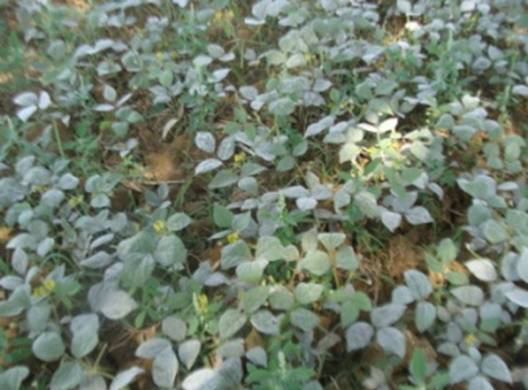
Warm and dry season helps to spread this disease. The disease appears widely in many urdbean growing regions of India. Warm and dry season helps to spread this disease. It is caused by fungus Eerisiphae polygony, that spreads by air through parasitic plants. The causal organism survives in fields on crop residues that act as the disease innoculum for next crop.
Symptoms:
- The symptoms of disease can be seen on all the aerial parts of plant
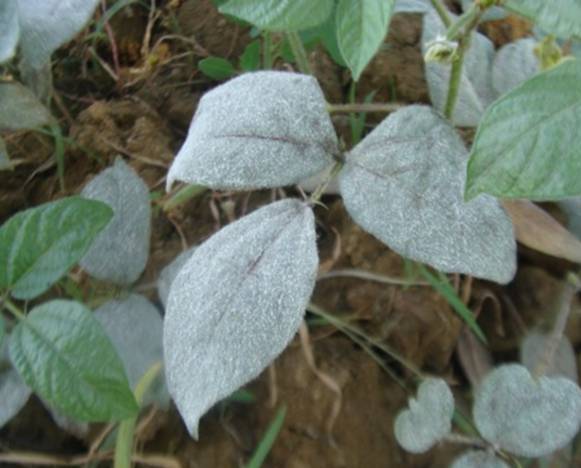
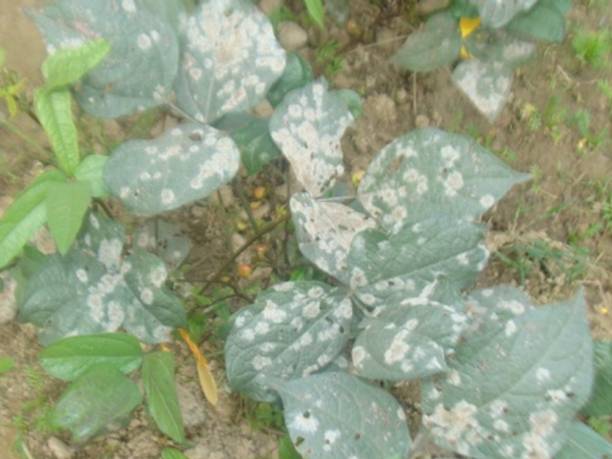
- The disease first appears as dark, unpleasant coloured spots on the lower leaves that gradually change to large white spots. As the intensity of the disease increases, these spots become larger and spread towards the upper leaves, stem, branches and pods.Later, these white floury patches consisting the mycelium and conidial mass of the fungus cover large area of the plant.
- Sometimes, necrosis and browning of affected tissues is also seen.
- The severely affected plants look as if talcum powder has been thrown on the leaves.
Management
- Use of disease resistant varieties such as IPU 02-43, LBG 17, LBG 402, TARM 1 and Pusa 9072 for South Zone , especially for rabi season.
- Spray wettable sulfur at the rate of 0.3%. or carbendazim @ 0.5 g/liter of water as soon as disease symptoms appear. The spray may be repeated at 10-15 days interval, if required.
- Spray of carbendazim (0.5g/litre water) or carathene @ 1ml/litre water, soon after the emergence of disease. Second spray may be done at the internal of 10-15 days, if needed.